In industrial environments where flammable gases, vapors, or combustible dust are present, a standard cooling system can quickly turn into a serious safety risk. This is where explosion proof air conditioners play a critical role. Designed specifically for hazardous locations, these systems deliver reliable cooling while minimizing ignition risks and ensuring regulatory compliance.
This guide explains what explosion proof air conditioners are, how they work, where they are used, and what compliance standards matter most—so safety managers, engineers, and procurement teams can make informed decisions.
What Are Explosion Proof Air Conditioners?
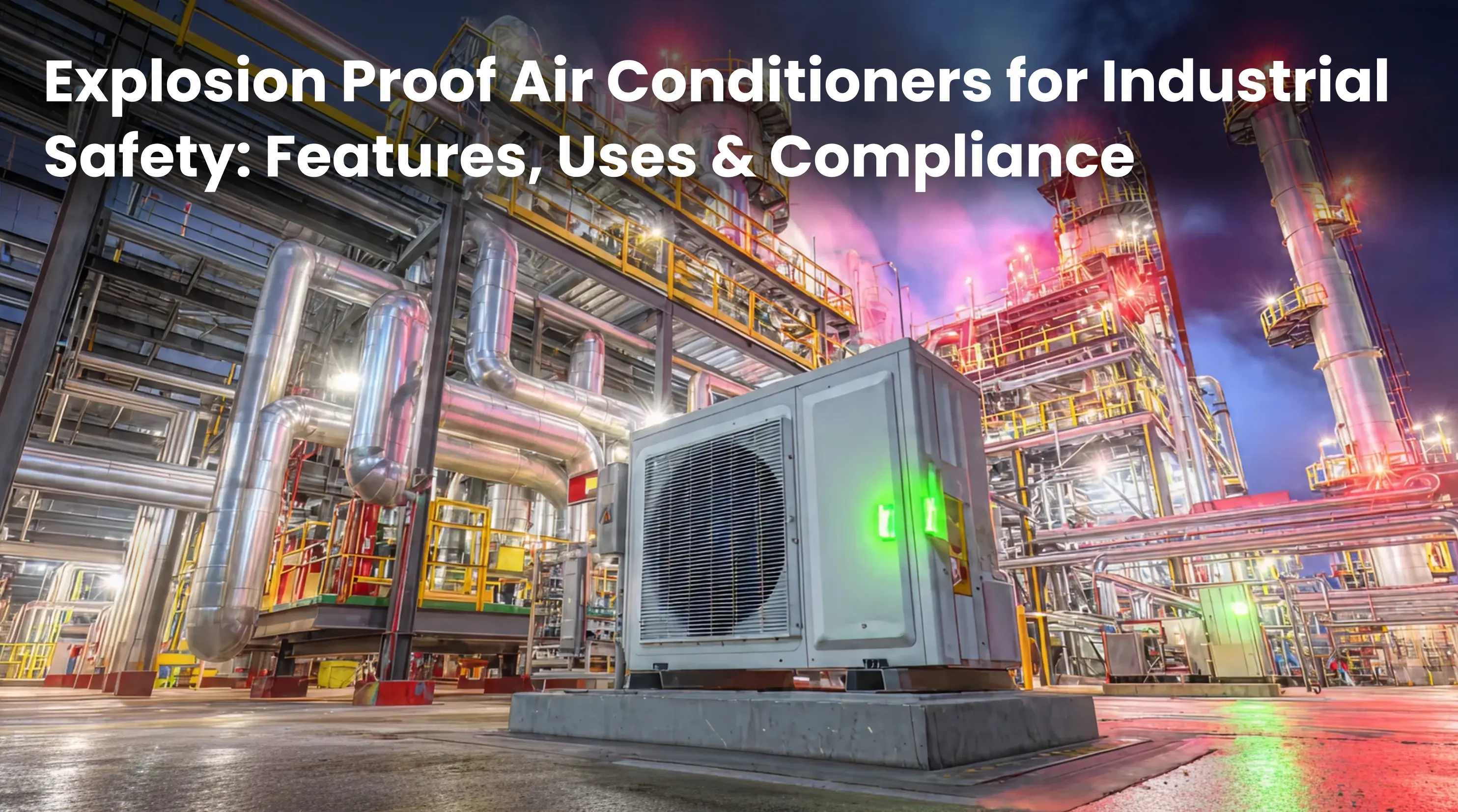
Explosion proof air conditioners are specialized cooling systems engineered for hazardous environments where explosive atmospheres may occur. Unlike conventional units, they are built to prevent sparks, high surface temperatures, or electrical faults from igniting surrounding gases or dust.
These systems are often referred to as:
- Air conditioning systems
- AC units
- Industrial and Hazardous area AC
They are commonly installed in Zone 1 and Zone 2 classified areas, where safety cannot be compromised.
How Explosion Proof AC Work
Understanding how explosion proof AC work helps clarify why they are essential for industrial safety.
Key operational principles include:
- Spark-free components: Electrical parts are designed or enclosed to prevent spark generation.
- Sealed enclosures: Critical components are housed in sealed or pressurized enclosures to isolate ignition sources.
- Controlled surface temperatures: Materials and designs ensure temperatures stay below ignition thresholds.
- Heavy-duty construction: Built to withstand corrosive, dusty, and high-temperature industrial conditions.
This combination ensures reliable cooling without increasing explosion risk—something a normal AC simply cannot guarantee.
Key Features of Explosion Proof AC Design
A well-engineered AC design includes multiple safety-focused features:
1. Intrinsically Safe Operation
Many systems integrate principles of intrinsically safe air conditioning systems, limiting electrical energy to levels that cannot cause ignition.
2. Flameproof and Spark-Free Protection
Depending on the application, units may function as a flameproof air conditioner or spark free air conditioner, ensuring internal faults do not ignite external atmospheres.
3. Sealed Enclosure Technology
Sealed enclosure air conditioners protect sensitive components from hazardous external conditions like corrosive gases or fine dust.
4. Industrial-Grade Materials
Explosion proof AC units use corrosion-resistant metals, reinforced wiring, and robust insulation for long-term reliability.
Industrial Applications and Use Cases
Cooling is not optional in many industries—it is mandatory.
Oil & Gas Industry
Explosion proof air conditioners for oil and gas industry operations are used in:
- Control rooms
- Drilling platforms
- Gas processing units
Chemical Plants
An Flameproof AC for chemical plants ensures safe temperature control in areas handling volatile chemicals.
Refineries
Hazardous area air conditioning for refineries protects equipment and personnel in high-risk processing zones.
Power Plants
Flameproof AC for power plants help maintain stable operating conditions in turbine halls and control centers.
Offshore Platforms
AC for offshore platforms must withstand extreme weather, salt corrosion, and explosive gas exposure.
Explosion Proof vs Flameproof vs Intrinsically Safe AC
Safety terminology can be confusing, so let’s simplify.
Explosion Proof vs Flameproof Air Conditioners
- Designed to contain or prevent ignition under fault conditions.
- Built to withstand an internal explosion without igniting the surrounding atmosphere.
Explosion Proof vs Intrinsically Safe AC
- Explosion proof: Uses containment and isolation.
- Intrinsically safe: Limits electrical energy to non-ignition levels.
Understanding the difference between hazardous area AC and normal AC is crucial—standard air conditioners are not designed for explosive environments and pose serious risks if used incorrectly.
Compliance, Certification & Safety Regulations
Compliance is not just a checkbox—it’s a legal and operational requirement.
Blast Resistant Equipment Certification
Reliable systems meet international standards such as:
- ATEX
- IECEx
These certifications confirm the equipment has passed rigorous safety testing.
Industrial Safety Regulations for HVAC
HVAC systems must comply with:
- Hazardous area classification rules
- Electrical safety standards
- Industry-specific regulations
Failure to comply can result in operational shutdowns, penalties, or safety incidents.
Choosing the Right Explosion Proof Air Conditioner
Before you buy, consider these factors:
- Area classification (Zone 1 or Zone 2)
- Ambient temperature and humidity
- Cooling capacity requirements
- Power supply compatibility
- Maintenance accessibility
Many industries now opt for customized air conditioners to meet site-specific needs.
Suppliers, Procurement & Regional Availability
When sourcing equipment, work only with experienced AC suppliers who understand industrial compliance, safety certifications, and hazardous area requirements. Thermodynamics ME is a trusted supplier in this space, offering certified AC solutions designed for oil & gas, chemical plants, refineries, and other high-risk industrial environments.
Final Thoughts
From oil refineries to offshore platforms, the right AC systems protect lives, equipment, and operations.
By understanding features, applications, and compliance requirements, businesses can invest confidently in industrial cooling solutions that meet both safety regulations and performance demands.
If industrial safety matters to your operation, choosing the right HVAC system is not optional—it’s essential.