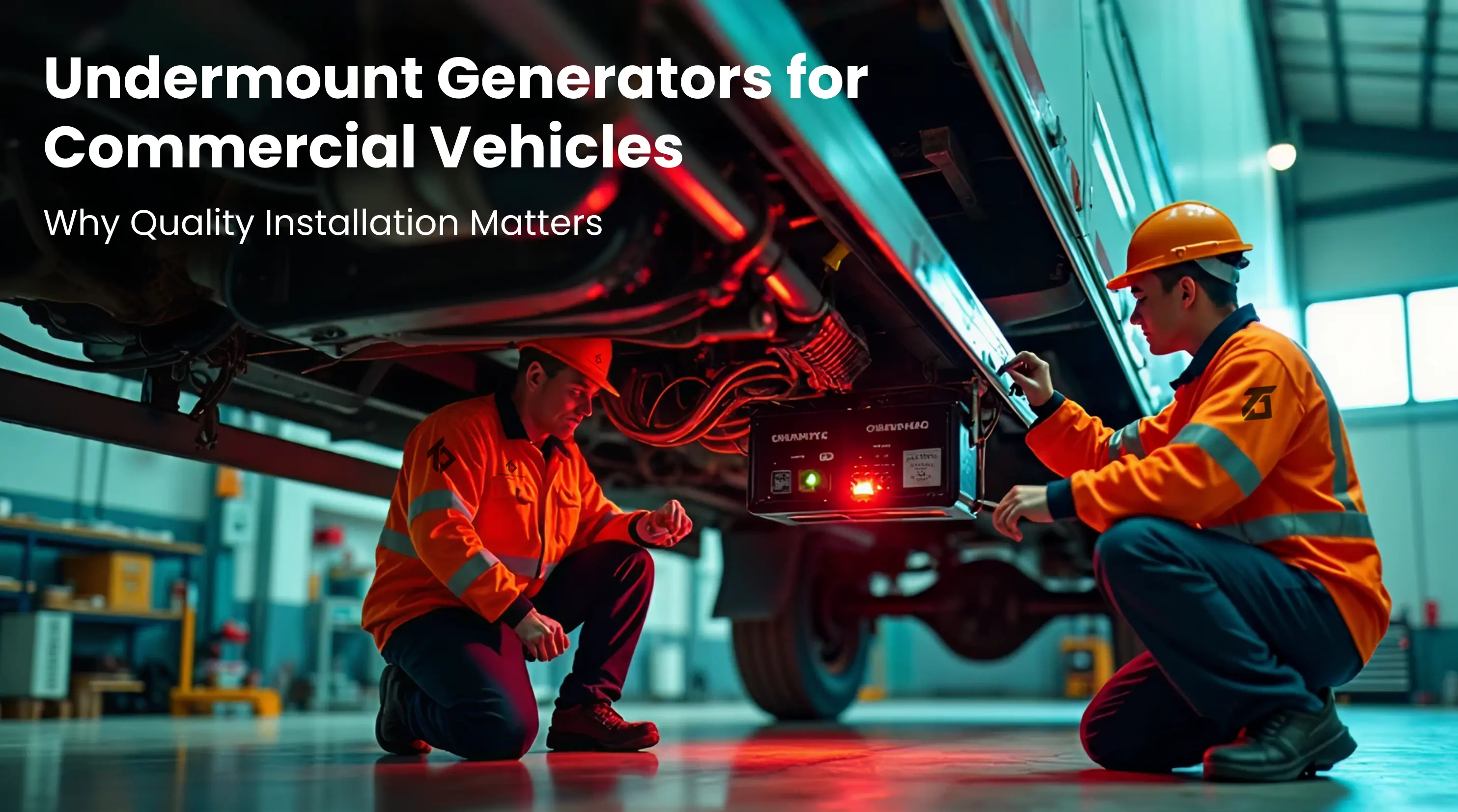
In the commercial vehicle industry, power reliability can define productivity. Whether you operate long-haul trucks, refrigerated vehicles, or mobile service fleets, undermount generators are essential for keeping operations running smoothly. Yet, one factor that’s often overlooked — and critically important — is installation quality. The way your undermount generator is fitted directly impacts performance, lifespan, and safety. Let’s dive deep into why professional installation isn’t just recommended — it’s necessary.
Understanding Undermount Generators in Commercial Vehicles
Undermount generators are compact, high-output power systems installed beneath the chassis of trucks or vans. They provide electricity for auxiliary systems — refrigeration, lighting, onboard tools, or air-conditioning — without depending on the main engine. This setup improves fuel efficiency, reduces idling, and enhances operational flexibility.
However, even the best generator can underperform or fail prematurely if it’s not installed correctly. That’s where expert fitting makes all the difference.
How Proper Installation Improves Generator Life
Every mechanical component in a commercial vehicle faces constant stress from vibration, temperature variations, and load fluctuations. Proper installation minimizes these challenges by:
- Ensuring precise alignment between mounts and support brackets.
- Maintaining adequate ventilation and cooling clearance.
- Securing all fuel, exhaust, and electrical connections to avoid leaks or short circuits.
A generator that’s correctly positioned and balanced can operate at optimal efficiency, reducing wear and extending its service life by years.
Benefits of Professional Generator Fitting
Choosing a professional installation service isn’t just about convenience — it’s about performance assurance. Experienced technicians understand:
- The vehicle’s structural integrity, ensuring the generator mount doesn’t compromise the chassis.
- Load distribution dynamics, so the generator’s weight doesn’t affect vehicle balance.
- Electrical safety codes and grounding procedures to prevent power loss or fire hazards.
Ultimately, professional generator fitting safeguards your investment, guaranteeing consistent power delivery for critical commercial applications.
Why Installation Quality Matters in Vehicle Generators
A well-installed generator doesn’t just run better — it also operates safer and smarter. Poor installations can lead to:
- Fuel leaks that pose fire risks.
- Loose mounts that amplify vibration and damage wiring.
- Reduced cooling efficiency, leading to overheating or mechanical failure.
When installation quality is prioritized, these risks are mitigated — ensuring dependable power output during long hauls and extreme conditions.
Expert Tips for Mounting Undermount Generators
Industry experts recommend a few essential practices when mounting an undermount generator:
- Use vibration-damping mounts to absorb road shocks.
- Seal all electrical junctions against dust and moisture.
- Position the generator for easy access during maintenance.
- Ensure exhaust routing prevents heat build-up near fuel lines.
- These details may seem minor, but collectively they enhance reliability, efficiency, and storage food safety.
How to Ensure Safe Generator Installation in Trucks
Safety should always come first. Before commissioning your installation:
- Inspect mounting brackets and bolts for load compatibility.
- Verify grounding continuity across all electrical components.
- Check fuel line integrity for tight, leak-free connections.
- Confirm proper shielding for wires exposed to heat or friction.
A pre-installation checklist and post-installation inspection ensure full compliance with both manufacturer and regulatory standards.
Preventing Vibration and Fuel Leaks in Undermount Generators
Vibration and fuel leaks are the two biggest threats to generator longevity.
- Vibration issues: Use anti-vibration isolators and torque the fasteners as per OEM recommendations.
- Fuel leaks: Employ high-quality fuel hoses with heat-resistant clamps and perform pressure tests after installation.
Consistent maintenance checks can further prevent small issues from becoming costly failures.
What Makes a Generator Setup Reliable for Long Hauls
Reliability is built on three principles:
- Stable Mounting: Prevents mechanical strain and component fatigue.
- Efficient Cooling: Keeps the generator from overheating during extended use.
- Power Consistency: Ensures steady voltage and frequency across varying loads.
When these elements are achieved through quality installation, fleets experience fewer breakdowns and more uptime.
Best Practices for Secure Generator Mounting
A secure mount begins with selecting grade-tested fasteners, anti-corrosion coatings, and reinforced steel frames. The mounting surface should be leveled and free from rust or oil residues to ensure full torque retention.
Professional installers also use 3D alignment tools to verify angle precision and fitment accuracy — reducing vibration-induced stress over time.
How Undermount Generators Affect Vehicle Power Efficiency
A properly installed undermount generator draws power efficiently and prevents unnecessary fuel consumption.
- Balanced energy flow reduces strain on alternators and batteries.
- Clean electrical connections minimize voltage drop.
- Correct exhaust routing enhances fuel combustion efficiency.
When installed correctly, the system not only powers your vehicle’s accessories but also contributes to overall energy efficiency.
Maximizing Generator Performance for Commercial Use
Performance optimization starts with installation accuracy and routine testing. Calibrate voltage output, check load distribution, and schedule maintenance at regular intervals. Integrating smart monitoring systems can also alert you to potential faults before downtime occurs.
Ways to Reduce Energy Loss from Poor Installation
Poor installation leads to hidden energy losses through:
- Resistance in loose connections
- Misaligned pulleys causing mechanical drag
- Heat dissipation from undersized cables
These inefficiencies can be easily avoided through professional setup and quality testing.
Balancing Power Needs with Compact Generator Setups
Fleet operators often face limited chassis space. A skilled installer can help balance power requirements with available space, selecting the right generator capacity and ensuring efficient cable routing without compromising vehicle aerodynamics or stability.
How Installation Impacts Generator Maintenance
Ease of maintenance is another reason installation quality matters. A well-laid-out generator system allows technicians to access filters, wiring, and connectors without dismantling entire mounts — saving time and reducing labor costs.
Avoiding Costly Repairs Through Proper Installation
Improper installations can lead to recurring failures — from electrical shorts to cracked mounts. Choosing Thermodynamics, a professional installation service provider in Dubai and across the UAE, minimizes these risks through precision engineering and expert fitting — protecting your investment and reducing long-term repair expenses.
Extending Generator Lifespan for Fleet Vehicles
Routine inspections, combined with proper installation, can extend generator life by up to 40%. Using OEM-approved hardware, torque settings, and cooling layouts ensures consistent operation and long-term reliability.
Common Installation Mistakes That Reduce Generator Life
Avoid these pitfalls:
- Over-tightening mounts
- Poor grounding practices
- Improper exhaust clearance
- Using incompatible fittings or wiring
Even minor deviations can cause vibration fatigue, voltage drops, or premature component wear.
Best Undermount Generator Options for Delivery Trucks
Delivery fleets need compact, high-output generators with silent operation. Look for models that feature smart start systems, low fuel consumption, and automatic load management. Always consult professional installers for compatibility checks with your vehicle’s make and model.
Generator Installation Advice from Fleet Engineers
Fleet engineers emphasize the value of data-driven installation — measuring vibration levels, load balance, and thermal mapping before finalizing the mount. These precision methods enhance generator stability and power output.
Why Fleet Managers Choose Professional Installers
For fleet operators, downtime equals loss. That’s why managers rely on professional installers — not only for technical expertise but also for safety compliance, warranty protection, and post-installation support. Certified technicians ensure your generator is road-ready and legally compliant.
Comparing DIY vs Expert-Installed Undermount Systems
While DIY installation may seem budget-friendly, it often leads to costly mistakes. Expert-installed systems deliver:
- Warranty-backed reliability
- Optimized airflow and alignment
- Safe electrical integration
- Reduced operational risk
The upfront cost of professional installation quickly pays off in durability, safety, and peace of mind.
Final Thoughts
Quality installation is the foundation of generator performance. It determines whether your undermount generator runs efficiently for years — or fails prematurely due to preventable issues. For fleet owners, truck operators, and logistics companies, investing in expert installation isn’t just smart — it’s essential.
A well-installed undermount generator doesn’t just power your journey; it powers your success.