Cold storage is critical to businesses that handle temperature-sensitive products. Food manufacturers, supermarkets, hotels, restaurants, pharmaceutical companies, healthcare facilities, distributors and cold-chain operators all depend on refrigeration systems that can maintain stable operating conditions.
In the UAE, maintaining these systems requires particular attention because refrigeration equipment operates in a demanding environment. Effective maintenance is therefore not simply about repairing a failed compressor. It is about preventing avoidable breakdowns, maintaining temperature control, protecting stored products and keeping critical equipment operational.
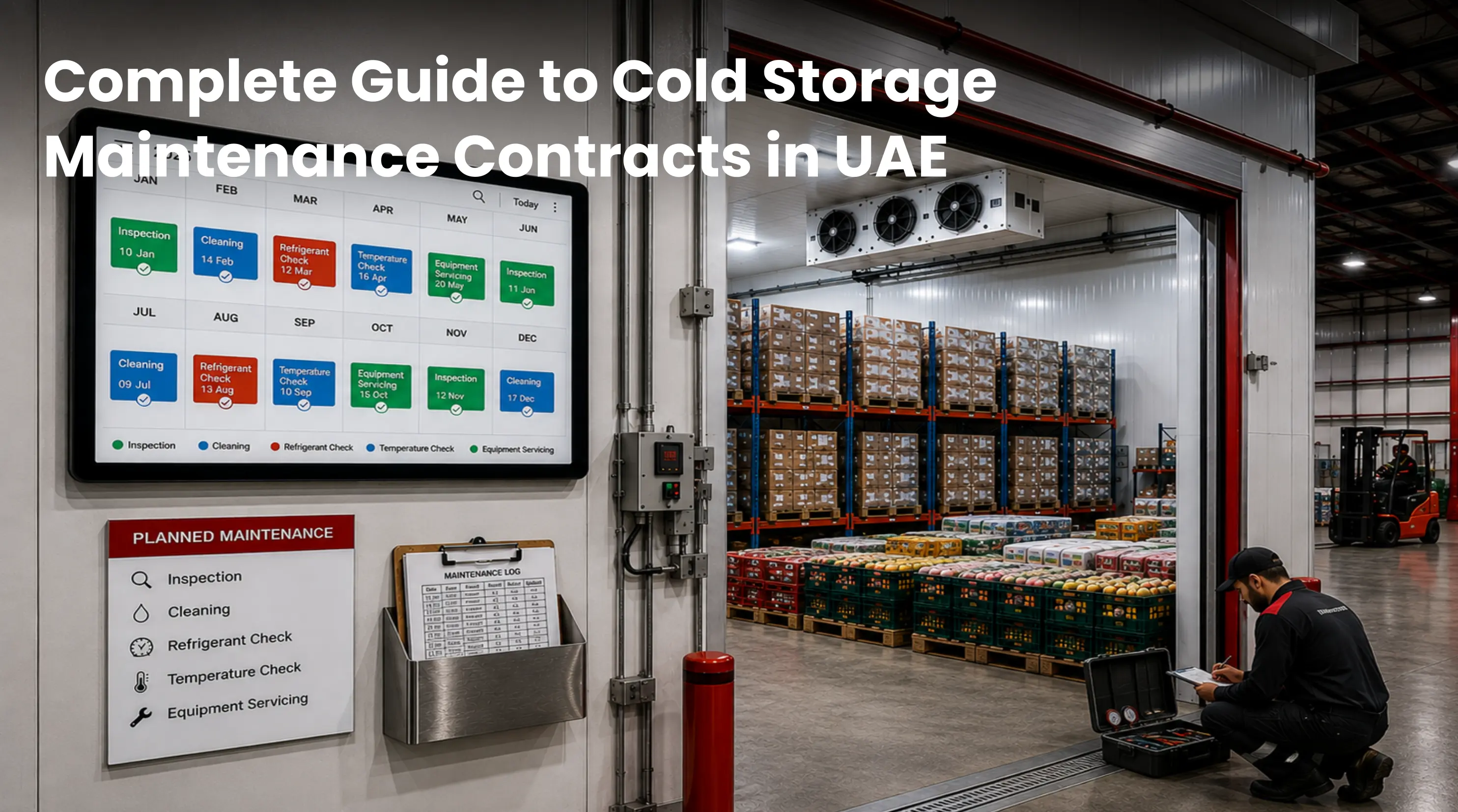
A cold storage maintenance contract in the UAE provides a structured approach to preventive servicing, equipment inspection, breakdown support and, where required, temperature monitoring. The exact scope depends on the facility, equipment, operating conditions and contractual requirements.
What Is a Cold Storage Maintenance Contract?
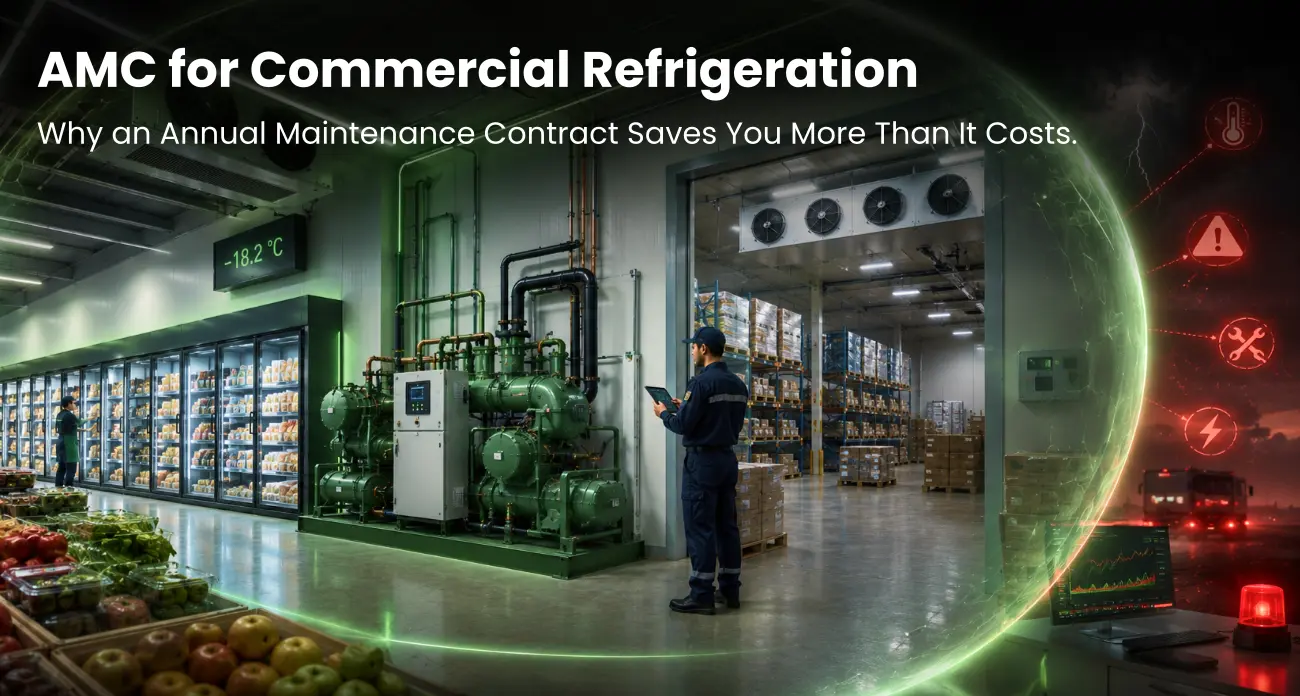
A cold storage maintenance contract, commonly called an Annual Maintenance Contract (AMC), is a service agreement between a facility operator and a refrigeration service provider covering the planned inspection, servicing and maintenance of cold rooms and associated refrigeration equipment.
Depending on the contract, it may cover compressors, condensers, evaporators, fans, electrical controls, temperature controllers, sensors, refrigerant circuits, doors, seals, drainage and other components.
The objective is straightforward: identify and address developing problems before they become disruptive failures.
A well-structured AMC should clearly define preventive maintenance frequency, emergency response, reporting, spare-parts responsibilities, exclusions, service-level expectations and escalation procedures.
Why Is Cold Storage Maintenance Important in the United Arab Emirates?
The UAE's operating environment makes refrigeration reliability particularly important. Cold-storage equipment must continually remove heat from temperature-controlled spaces while operating in an environment where ambient conditions can be demanding.
Dust accumulation, condenser fouling, deteriorating door seals, refrigerant problems, electrical faults and inadequate airflow can all affect system performance.
For businesses storing perishable or temperature-sensitive products, a refrigeration failure can have consequences beyond equipment repair. It may affect product quality, inventory, customer commitments and business continuity.
Dubai Municipality's storage guidance requires appropriate temperature control according to product conditions and calls for temperature measurements to be monitored and recorded in storage areas. It also recommends routine maintenance for relevant HVAC systems.
This makes maintenance and monitoring important parts of responsible cold-storage management rather than purely engineering concerns.
What Does a Cold Storage AMC Typically Include?
The scope should be tailored to the refrigeration system and the operational requirements of the facility. A comprehensive maintenance programme may include inspection and servicing of:
- Compressors and condensing units
- Condenser coils and fans
- Evaporators and evaporator fans
- Refrigerant circuits and connections
- Pressure controls and safety devices
- Expansion valves and related components
- Electrical connections and control panels
- Temperature controllers and sensors
- Defrost systems
- Cold-room doors and door gaskets
- Drainage systems
- Refrigeration pipe insulation
- Alarms and monitoring equipment
Routine maintenance should also assess whether the system is maintaining the required temperature consistently.
Preventive Maintenance vs Emergency Refrigeration Repair
Preventive maintenance is designed to reduce the likelihood of unexpected equipment failure; emergency repair responds after a fault has occurred.
This distinction is important for businesses operating critical cold-storage facilities.
Reactive maintenance may involve responding to:
- A sudden temperature increase
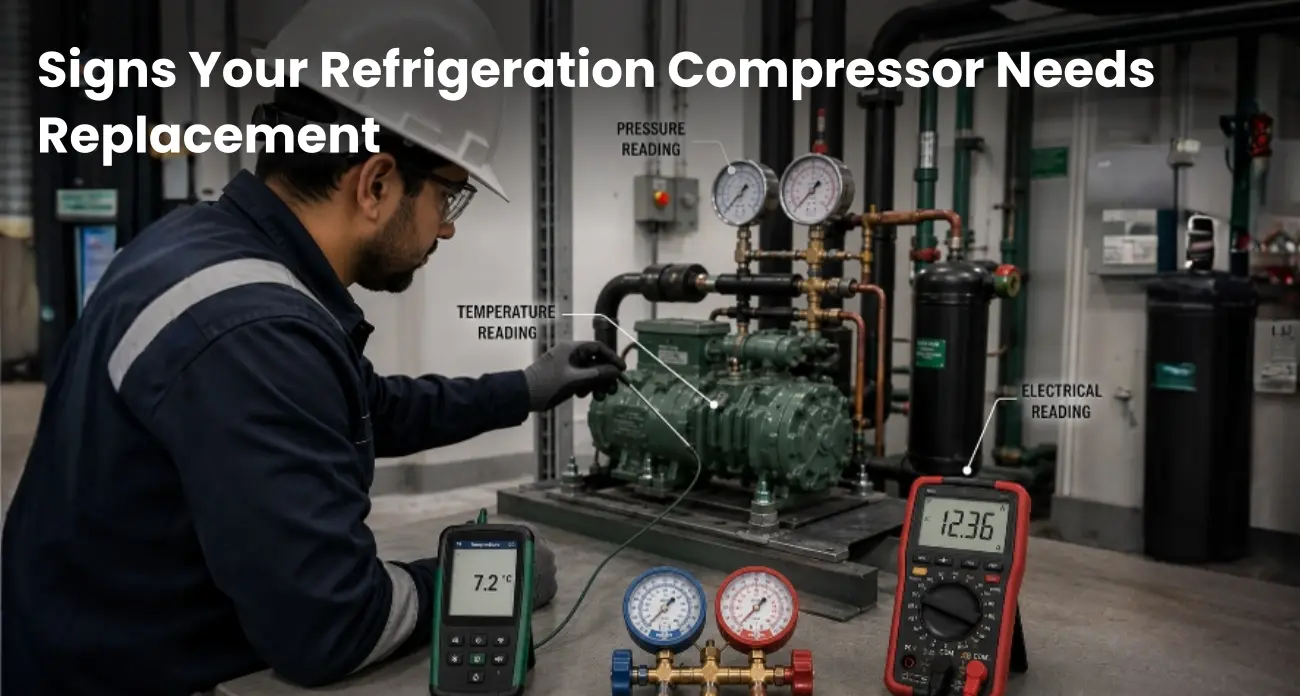
- Compressor failure
- Refrigerant leakage
- Condenser problems
- Electrical faults
- Fan failure
- Controller malfunction
- Door-seal deterioration
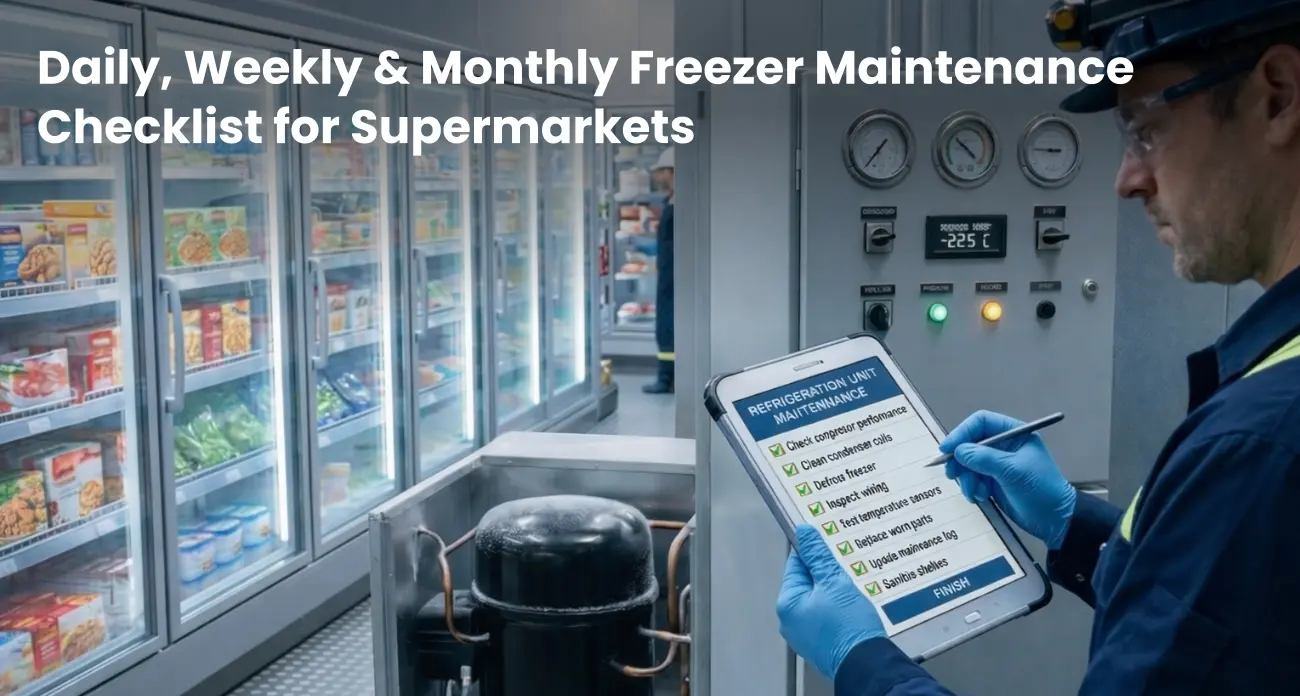
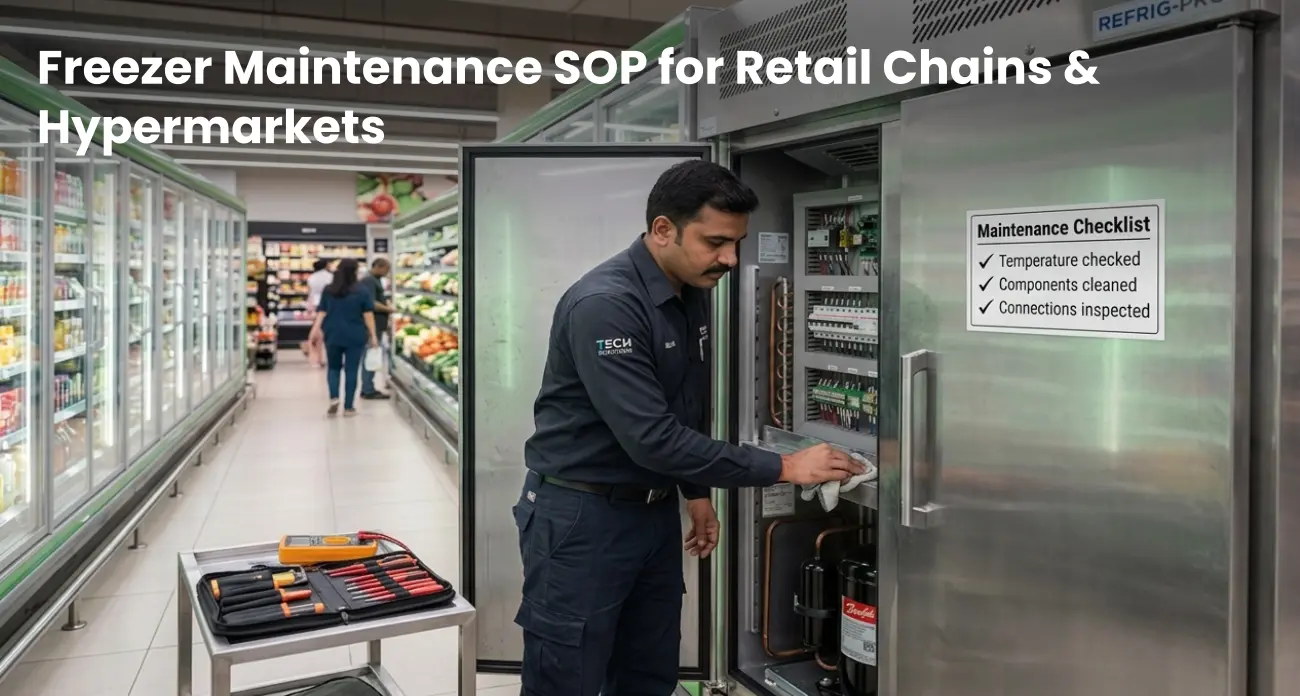
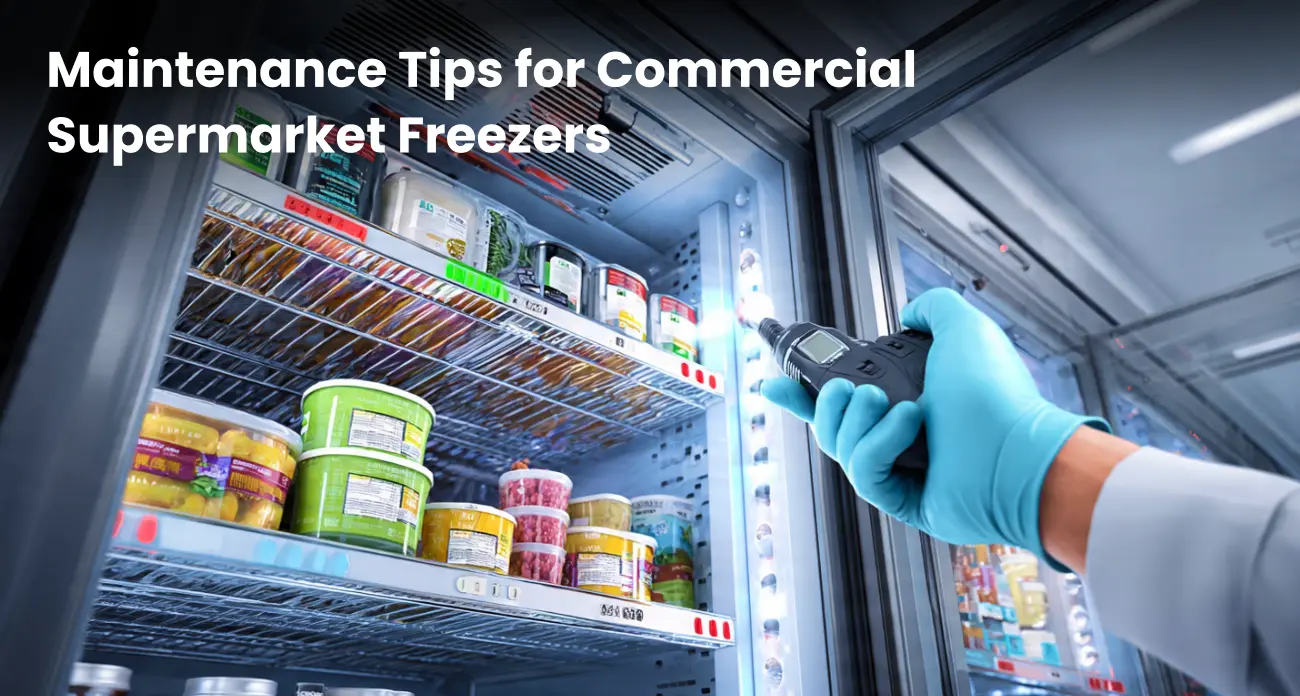
Preventive maintenance takes a different approach. Technicians inspect equipment at planned intervals, identify abnormal conditions and rectify developing faults before they result in a major breakdown.
A strong AMC can therefore combine both approaches: scheduled preventive servicing with defined emergency support when an unexpected failure occurs.
How Often Should Cold Storage Equipment Be Serviced?
There is no single maintenance frequency that is appropriate for every cold-storage facility.
The required schedule depends on factors such as equipment type, operating hours, storage temperature, ambient conditions, equipment age, product criticality, loading frequency and manufacturer recommendations.
A facility operating continuously with heavy traffic may require more frequent attention than a smaller installation with limited operating hours.
A maintenance programme should therefore be based on equipment condition and operational risk, rather than selecting an arbitrary service frequency.
Each preventive visit should generate a service record showing what was inspected, what was found, what was adjusted or repaired and whether further action is recommended.
Temperature Monitoring Should Be Part of the Maintenance Strategy
Refrigeration equipment can appear to be operating while the storage environment is gradually moving outside its required range. This is why temperature monitoring should complement physical equipment maintenance.
A modern monitoring arrangement may include:
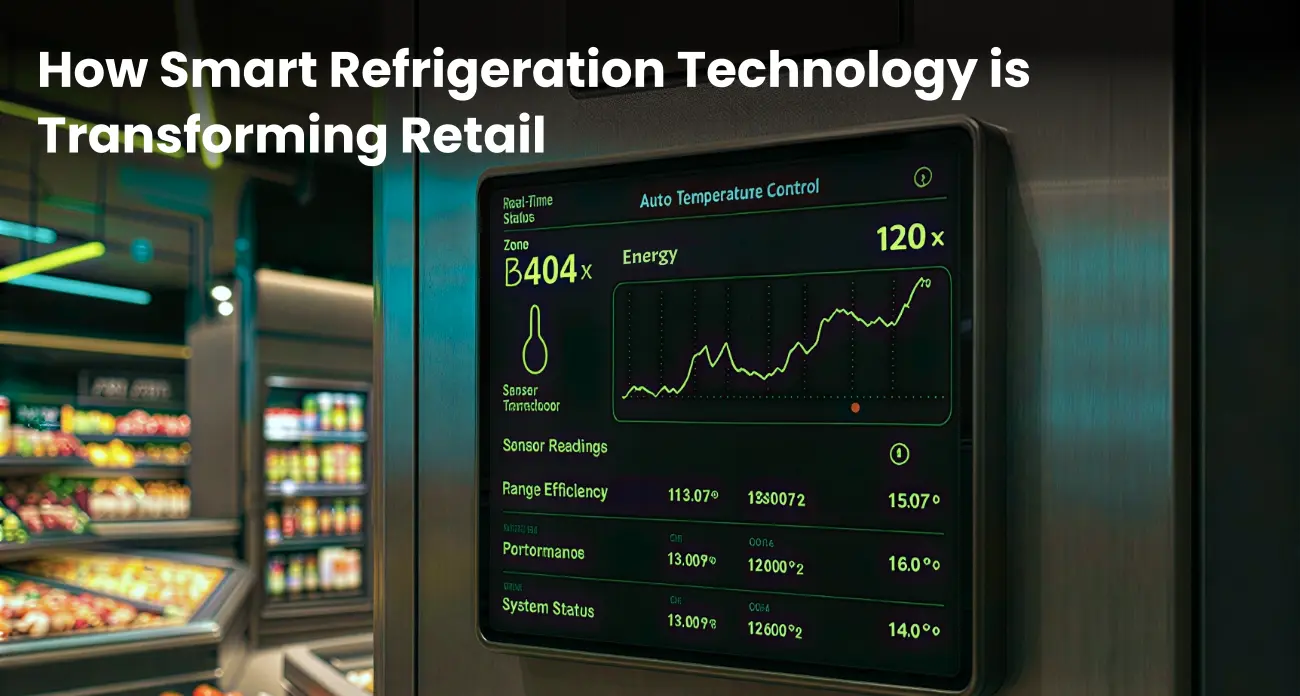
Sensors → Data logging → Alerts → Remote visibility → Historical records → Corrective action
For example, an unexpected temperature increase can trigger an alert before the problem develops into a significant product-quality issue.
Dubai Municipality's technical guidance states that temperature measurements should be monitored and recorded for relevant storage areas, with temperature and relative-humidity records maintained where applicable.
For critical facilities, businesses should therefore consider whether their maintenance contract includes sensor inspection, controller verification, alarm testing and monitoring-system support.
Cold Storage Maintenance for Food and Beverage Businesses
Food businesses rely on stable temperature control throughout storage and handling. This includes food manufacturers, distributors, supermarkets, hotels, restaurants, central kitchens and other food establishments.
Maintenance should support the facility's ability to maintain the required storage conditions while keeping refrigeration equipment operational.
Dubai Municipality's current food-establishment resources include requirements covering food storage, transportation and related food-safety controls. Its inspection programmes also assess temperature control and maintenance records as part of broader food-safety oversight.
For food businesses, the commercial value of preventive maintenance extends beyond refrigeration performance. Avoiding unnecessary downtime can help protect inventory, maintain operational continuity and reduce the risk associated with temperature-sensitive products.
Cold Storage Maintenance for Pharmaceutical Facilities
Pharmaceutical storage requires a more controlled approach because many medicines and healthcare products have defined storage conditions.
Maintenance programmes for pharmaceutical cold rooms should therefore consider refrigeration reliability, temperature monitoring, alarm functionality, documentation and the specific storage requirements applicable to the products.
The key principle is that temperature control should be demonstrable, not merely assumed.
For facilities with critical pharmaceutical storage, maintenance and monitoring records should be organised so that responsible personnel can establish what happened to the equipment and storage environment over time.
The precise regulatory requirements depend on the facility, products and applicable UAE authority, so businesses should verify their obligations against the relevant current regulatory requirements.
What Should You Look for in a Cold Storage AMC Provider in the United Arab Emirates?
Price is only one factor when comparing maintenance providers.
A procurement or engineering team should consider:
- Technical expertise – Does the provider understand the refrigeration equipment installed at the facility?
- Preventive maintenance scope – Is the inspection programme clearly defined?
- Emergency response – What response time applies when a critical failure occurs?
- Spare-parts support – Are critical replacement components readily available?
- Temperature monitoring – Can the provider inspect and maintain monitoring systems?
- Documentation – Are detailed service reports provided after each visit?
- Experience – Has the provider worked with similar cold-storage applications?
- Scalability – Can the service adapt if the facility expands?
- Maintenance planning – Are future service requirements identified in advance?
- After-sales support – Is technical assistance available when it is needed?
A technically detailed proposal is generally more useful than a quotation containing only a single annual price.
What Should a Cold Storage AMC SLA Define?
Before signing a maintenance contract, the business should understand exactly what happens when something goes wrong.
A useful Service Level Agreement (SLA) should clarify:
- Preventive visit frequency
- Emergency response time
- Support hours
- Escalation procedure
- Breakdown coverage
- Spare-parts responsibility
- Refrigerant coverage
- Labour charges
- Monitoring-system support
- Reporting requirements
- Exclusions
- Contract renewal conditions
This prevents ambiguity when an emergency occurs.
For a warehouse holding high-value or temperature-sensitive products, response time can be as important as the annual contract price.
How Can Preventive Maintenance Improve Refrigeration Performance?
Regular maintenance helps identify conditions that can reduce refrigeration performance, including dirty heat-transfer surfaces, deteriorating seals, abnormal refrigerant conditions, faulty fans, electrical problems and control-system issues.
Clean heat-transfer surfaces, properly functioning fans, sound insulation and correctly operating controls can help the system operate as intended.
Energy performance should nevertheless be assessed as part of the complete refrigeration system. Maintenance alone cannot compensate for an incorrectly designed or inadequately sized installation.
What Should a Business Ask Before Signing a Cold Storage Maintenance Contract?
Before committing to an AMC, ask the provider:
- What equipment is included?
- How frequently will preventive maintenance be performed?
- What inspections are carried out during each visit?
- What is the emergency response commitment?
- Are spare parts included?
- Is refrigerant included?
- Are temperature sensors and controllers inspected?
- Are service reports provided?
- How are recurring faults identified?
- What happens if the same equipment repeatedly fails?
These questions help a business compare service quality and risk coverage, rather than comparing quotations solely on price.
Businesses planning to renew an existing contract or establish a new maintenance programme should first assess their refrigeration equipment, storage conditions, operational risks and monitoring requirements. A technical assessment can then be used to define an AMC around the facility's actual needs rather than applying a generic maintenance package.
Thermodynamics ME can assess your cold-storage and refrigeration requirements and help define an appropriate maintenance and technical-support programme for your UAE facility.
Frequently Asked Questions (FAQs)
What is a cold storage maintenance contract?
A cold storage maintenance contract is a structured service agreement covering scheduled inspections, preventive maintenance and, according to the agreed scope, corrective and emergency support for refrigeration and cold-room systems. Thermodynamics ME provides tailored refrigeration AMC solutions designed to maintain system reliability, minimise unplanned downtime and support efficient operation throughout the year. Its refrigeration expertise covers cold-storage systems, supermarket refrigeration and other temperature-controlled applications across commercial and industrial environments.
Why is preventive maintenance important for cold rooms in the UAE?
Preventive maintenance helps identify developing equipment issues before they escalate into costly breakdowns or operational disruption. This is particularly important in the UAE, where refrigeration systems operate under demanding ambient conditions. Thermodynamics ME's preventive maintenance approach focuses on maintaining refrigeration performance, reducing downtime and supporting energy efficiency, with service capabilities covering refrigeration equipment and related systems.
Does a cold storage AMC include emergency repairs?
The scope depends on the AMC agreement and the equipment covered. A contract should clearly state preventive-visit frequency, emergency response, labour, spare parts, refrigerant, major component replacement and other exclusions or inclusions. Thermodynamics ME offers tailored refrigeration AMC solutions and proactive maintenance support, with its service operation supported by 200+ trained technicians, GPS-enabled service fleets and smart field-management tools. Businesses should confirm the specific response times, coverage and commercial terms before signing the contract.
How does temperature monitoring support cold storage maintenance?
Temperature monitoring provides evidence of actual storage conditions and can help identify deviations before they become significant operational problems. It complements physical refrigeration maintenance by showing whether the system is maintaining the required temperature consistently. Thermodynamics ME combines refrigeration maintenance expertise with smart service-management capabilities and supports temperature-critical sectors including food retail, cold-chain logistics, healthcare and pharmaceuticals.
How should a company choose a cold storage maintenance provider in the UAE?
Companies should evaluate more than the annual contract price. Important considerations include refrigeration expertise, preventive-maintenance scope, emergency support, technician capability, spare-parts availability, reporting, monitoring, equipment knowledge and experience with the relevant industry. Thermodynamics ME provides refrigeration AMC services alongside design, installation, retrofit and replacement capabilities, allowing businesses to work with a provider that understands the wider refrigeration system rather than maintenance in isolation. Its refrigeration portfolio includes cold rooms, walk-in chillers and freezers, skid-mounted cold rooms, blast chillers, blast freezers and large industrial cold-storage systems.
Need a Cold Storage Maintenance Contract in the United Arab Emirates?
A properly structured maintenance programme can help businesses move from reactive refrigeration repair to planned equipment management. For facilities where temperature control is critical, an effective AMC should combine preventive servicing, technical support, condition assessment, monitoring and clearly defined emergency procedures.
Thermodynamics ME provides tailored refrigeration AMC solutions for commercial and industrial applications, supported by its refrigeration engineering capabilities, trained service personnel and field-management infrastructure. Its wider service portfolio also includes refrigeration retrofits and component replacements, enabling businesses to address ageing or inefficient equipment alongside routine maintenance when required.