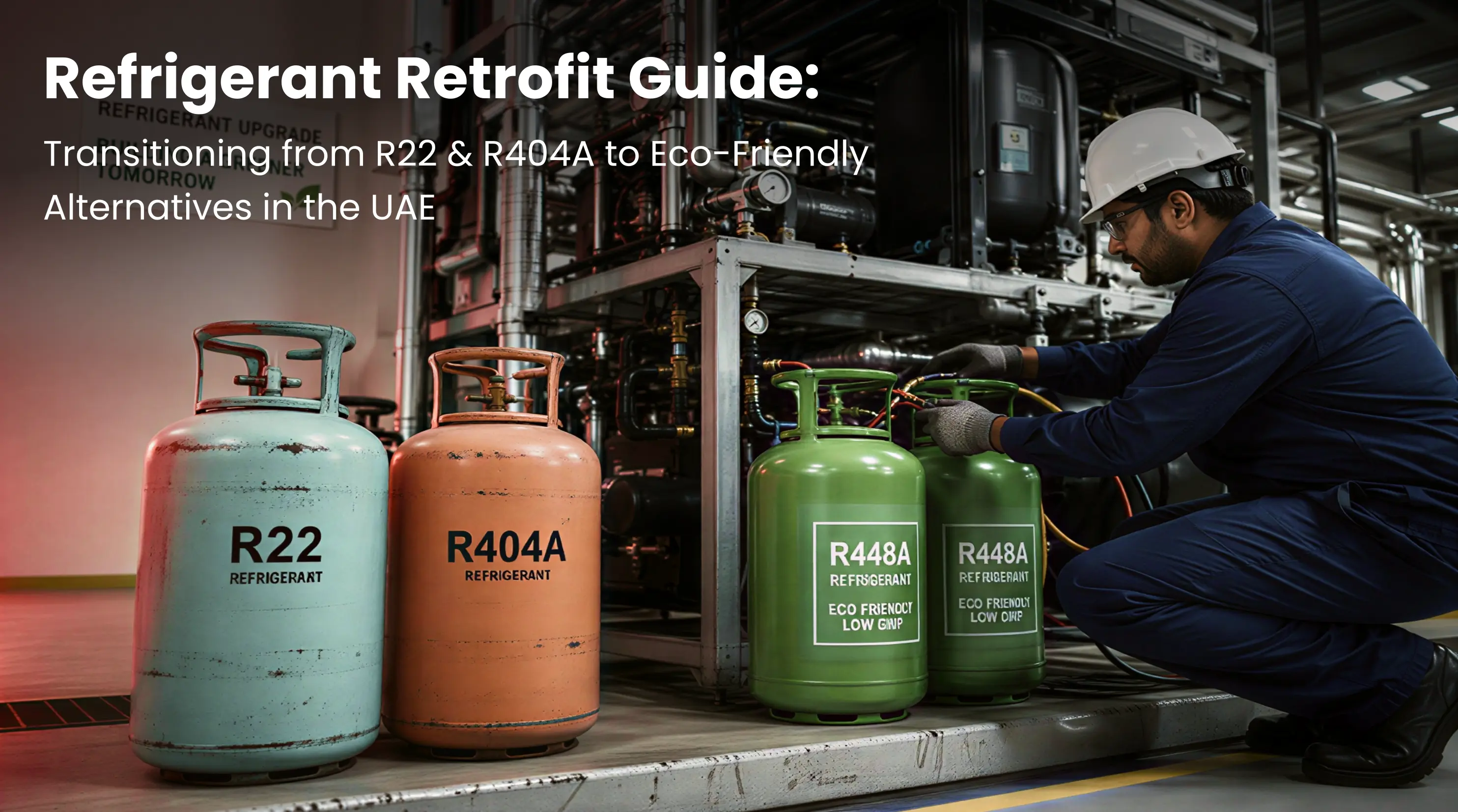
Refrigerant Retrofit Guide: Transitioning from R22 & R404A to Eco-Friendly Alternatives in the UAE
The refrigeration and HVAC industry is undergoing a major transformation as businesses move toward environmentally responsible cooling solutions. With stricter environmental regulations and growing sustainability goals, many companies are replacing outdated refrigerants such as R22 and R404A with modern low-emission alternatives.
This refrigerant retrofit guide explains how businesses in the UAE can successfully transition from older refrigerants to energy-efficient and eco-friendly alternatives while improving cooling performance and regulatory compliance.
What is a Refrigerant Retrofit?
A refrigerant retrofit is the process of upgrading existing refrigeration or HVAC systems to operate with alternative refrigerants that are safer for the environment and more energy efficient.
Instead of replacing an entire cooling system, businesses can modify certain components and optimize system settings to support modern refrigerants.
A typical commercial refrigeration retrofit may include:
- Refrigerant replacement
- Lubricant adjustments
- Expansion valve modifications
- System calibration and testing
- Leak inspection and performance optimization
This approach helps extend equipment lifespan while improving cooling efficiency.
Why is R22 Being Phased Out?
R22 was once widely used in refrigeration and air conditioning systems. However, it is now being phased out globally because of its harmful environmental impact.
Key Reasons for the R22 Phase-Out:
- High ozone depletion potential (ODP)
- Contribution to greenhouse gas emissions
As a result, businesses are increasingly adopting R22 refrigerant replacement strategies to comply with environmental standards.
In the UAE, companies are also aligning with sustainability initiatives by investing in green cooling technology and low-emission refrigerants.
Understanding the Challenges with R404A
R404A has been commonly used in supermarkets and commercial refrigeration systems, especially in low-temperature applications. However, this has a very high Global Warming Potential (GWP).
This has accelerated demand for:
- R404A retrofit solutions
- Eco-friendly alternatives to R404A cooling gas
- Low global warming potential cooling solutions
Modern businesses now seek refrigerants that reduce environmental impact while maintaining reliable cooling performance.
Eco-Friendly Alternatives
Today’s refrigeration industry offers several sustainable alternatives that improve energy efficiency and reduce environmental harm.
Common Low GWP Refrigerants:
| R448A | R449A | R452A | R290 (Propane) | CO₂-based |
These ozone-friendly are widely used for:
- Supermarket refrigeration
- Industrial cooling systems
- Cold storage facilities
- HVAC applications
Choosing the right refrigerant depends on cooling requirements, system compatibility, and operational goals.
Transitioning from R22 to Eco-Friendly Refrigerants
The transition process typically includes:
- System Evaluation: Existing equipment is inspected to determine compatibility with new cooling solutions.
- Gas Recovery: Remaining R22 gas is safely removed following environmental guidelines.
- Component Optimization: Specific system parts may require modification for proper performance.
This type of HVAC refrigerant conversion helps businesses modernize cooling systems without complete replacement.
R404A Replacement Options for Commercial Refrigeration
Retail stores and cold storage facilities are increasingly adopting R404A replacement options for commercial refrigeration to reduce energy consumption and comply with sustainability regulations.
Popular alternatives include:
- R448A for supermarket refrigeration
- R449A for commercial freezer systems
- CO₂ refrigeration systems for sustainable cooling
These hydrofluorocarbon alternatives improve cooling efficiency while supporting environmental goals.
Benefits of Refrigerant Retrofit
A well-planned refrigeration gas retrofit offers several operational and environmental advantages.
Improved Energy Efficiency
Modern refrigerants support energy efficient refrigeration systems, reducing electricity consumption.
Lower Environmental Impact
Using low GWP refrigerants helps reduce greenhouse gas emissions.
Extended Equipment Lifespan
Retrofits allow businesses to upgrade systems without major capital replacement.
Better Cooling Performance
Advanced refrigerants improve temperature stability and overall system reliability.
Leak Reduction
System optimization during retrofitting helps minimize refrigerant leakage risks.
These benefits make retrofits an important part of refrigeration system modernization.
UAE Refrigerant Regulations for R22 and R404A
The UAE is actively supporting sustainable cooling practices and environmentally responsible refrigeration technologies.
Businesses are increasingly adopting:
- Cooling system sustainability initiatives
- Low-emission
- Energy-efficient HVAC systems
As refrigerant phase-out regulations become stricter globally, companies operating in the UAE are investing in low GWP refrigerant solutions UAE to remain compliant and competitive.
Applications Across Industries
Supermarkets & Retail
Modern supermarkets rely heavily on refrigeration systems. A supermarket refrigeration retrofit helps improve efficiency while reducing operating costs.
Benefits include:
- Better product preservation
- Lower energy bills
- Sustainable supermarket refrigeration
Industrial & Warehousing
Large warehouses and cold storage facilities require efficient cooling systems for product preservation.
An industrial refrigeration retrofit supports:
- Improved temperature control
- Reduced environmental impact
- Better refrigeration energy optimization
This is especially important for cold storage refrigerant conversion projects.
HVAC Applications
Many commercial buildings and industrial facilities are also upgrading air conditioning systems through:
- HVAC replacement
- Air conditioning gas retrofit
- VRF conversion
These upgrades improve long-term HVAC efficiency and sustainability.
Which Refrigerant is Best for Commercial Refrigeration Systems?
The best is depends on:
- Application type
- Cooling load requirements
- Energy efficiency goals
- Environmental regulations
For many businesses, low global warming potential refrigerants such as R448A and CO₂ systems are becoming preferred choices because they balance efficiency and sustainability.
How Do Refrigerant Retrofits Improve Energy Efficiency?
Retrofits improve efficiency by:
- Enhancing heat transfer performance
- Reducing compressor workload
- Optimizing refrigerant flow
- Improving system calibration
This contributes to overall refrigeration energy optimization and reduced operational costs.
Choosing the Right Retrofit Company
Selecting an experienced retrofit company is critical for successful implementation.
A professional provider should offer:
- System evaluation and consultation
- Compatibility analysis
- Leak testing and optimization
- Ongoing maintenance support
Reliable HVAC retrofit services Dubai and across the UAE help businesses transition smoothly to modern refrigeration technologies.
Conclusion
The shift toward eco-friendly refrigerants is reshaping the future of refrigeration and HVAC systems. By following a structured retrofit guide, businesses can improve energy efficiency, reduce environmental impact, and comply with evolving regulations.
Whether upgrading supermarket refrigeration, industrial cooling systems, or HVAC infrastructure, transitioning from R22 and R404A to sustainable alternatives is a smart long-term investment.
Modern refrigerant transition solutions not only support environmental responsibility but also deliver better cooling performance and operational efficiency for businesses across the UAE.
Frequently Asked Questions (FAQs)
What is a refrigerant retrofit?
A retrofit is the process of modifying existing HVAC or refrigeration systems to operate with modern, environmentally friendly refrigerants. This upgrade typically includes replacement, system optimization, component adjustments, and performance testing to improve energy efficiency, reduce environmental impact, and extend equipment lifespan.
Why is R22 being phased out?
R22 is being phased out globally because it has ozone-depleting properties and contributes significantly to environmental pollution. International environmental agreements and sustainability regulations encourage businesses to replace R22 with low-emission refrigerants that are safer for the environment and more energy efficient.
What are eco-friendly alternatives to R404A?
Common eco-friendly alternatives to R404A include R448A, R449A, R452A, and CO₂-based refrigerants. These alternatives offer lower Global Warming Potential (GWP), improved cooling efficiency, and better environmental performance for commercial refrigeration and cold storage applications.
What are low GWP refrigerants?
Low GWP (Global Warming Potential) refrigerants are advanced cooling gases developed to minimize greenhouse gas emissions and reduce environmental impact. These refrigerants support sustainable cooling practices while improving energy efficiency and helping businesses comply with modern environmental regulations.
How do refrigerant retrofits improve energy efficiency?
Retrofits improve energy efficiency by optimizing cooling performance, reducing compressor workload, enhancing heat transfer, and minimizing gas leakage. Modern low GWP cooling solutions also help commercial refrigeration and HVAC systems operate more efficiently, leading to lower electricity consumption and reduced operational costs.