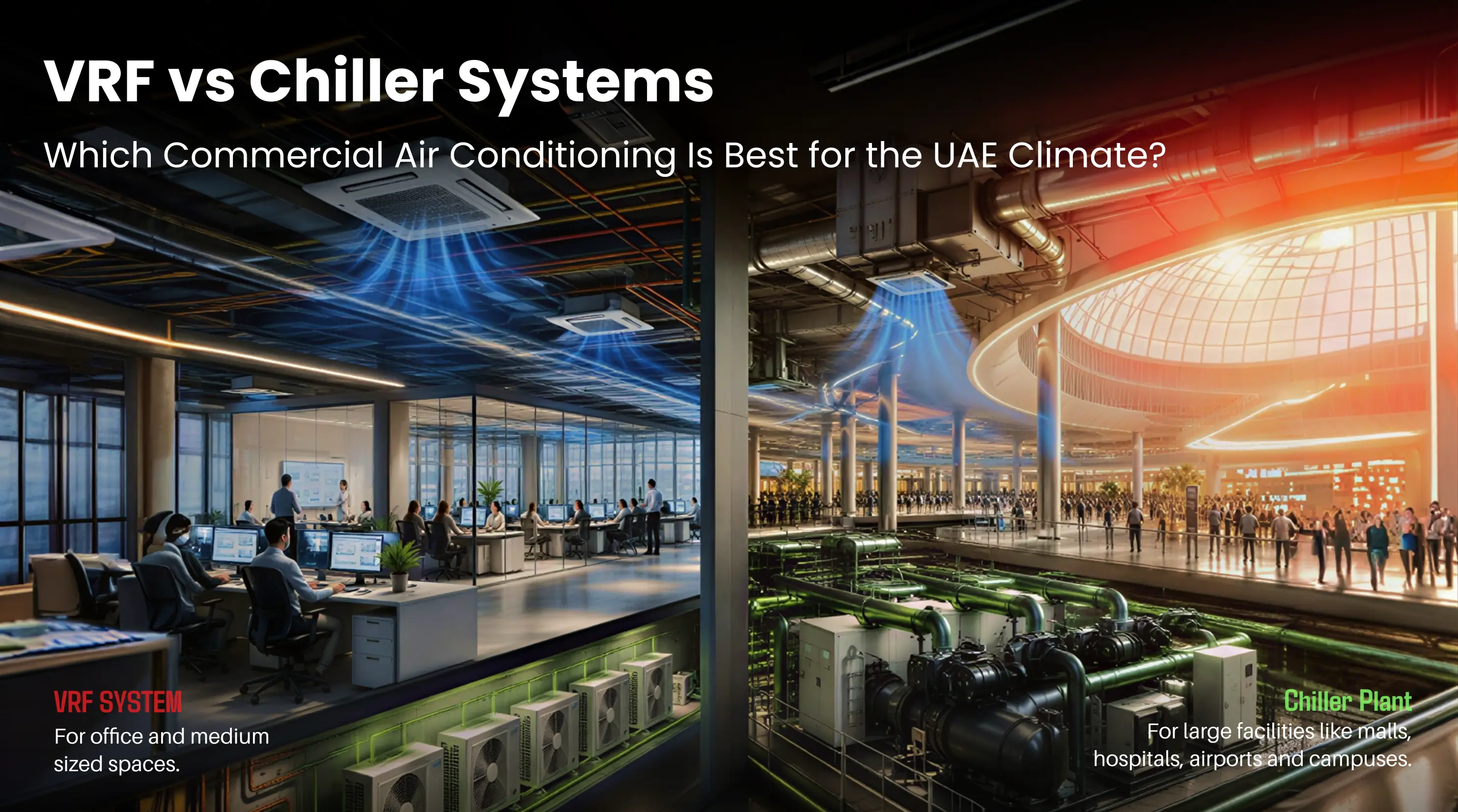
Selecting the right cooling solution is one of the most important decisions for commercial building owners, facility managers, and developers. In regions characterised by consistently high thermal loads throughout the year, the selection between VRF and chiller systems can have a substantial impact on energy utilisation, operational effectiveness, occupant satisfaction, and lifecycle expenditure.
Both technologies are widely used in modern commercial buildings, yet they serve different operational requirements. Understanding their strengths and limitations helps businesses choose the most suitable solution for their facilities.
Understanding VRF Air Conditioning Systems
Variable Refrigerant Flow (VRF) technology is an advanced climate-control solution that regulates refrigerant flow according to the cooling demand of individual zones.
Unlike traditional HVAC configurations, VRF systems enable individual indoor units to function independently while being linked to a single outdoor unit, allowing greater flexibility and precise climate control across different spaces. This adaptability makes the system particularly well-suited to buildings characterized by fluctuating occupancy levels and diverse operational demands.
Common Applications
- Office buildings
- Hotels
- Educational institutions
- Retail outlets
- Healthcare facilities
One of the primary advantages of VRF air conditioning systems is their ability to provide precise temperature control across multiple spaces simultaneously.
Understanding Commercial Chiller Systems
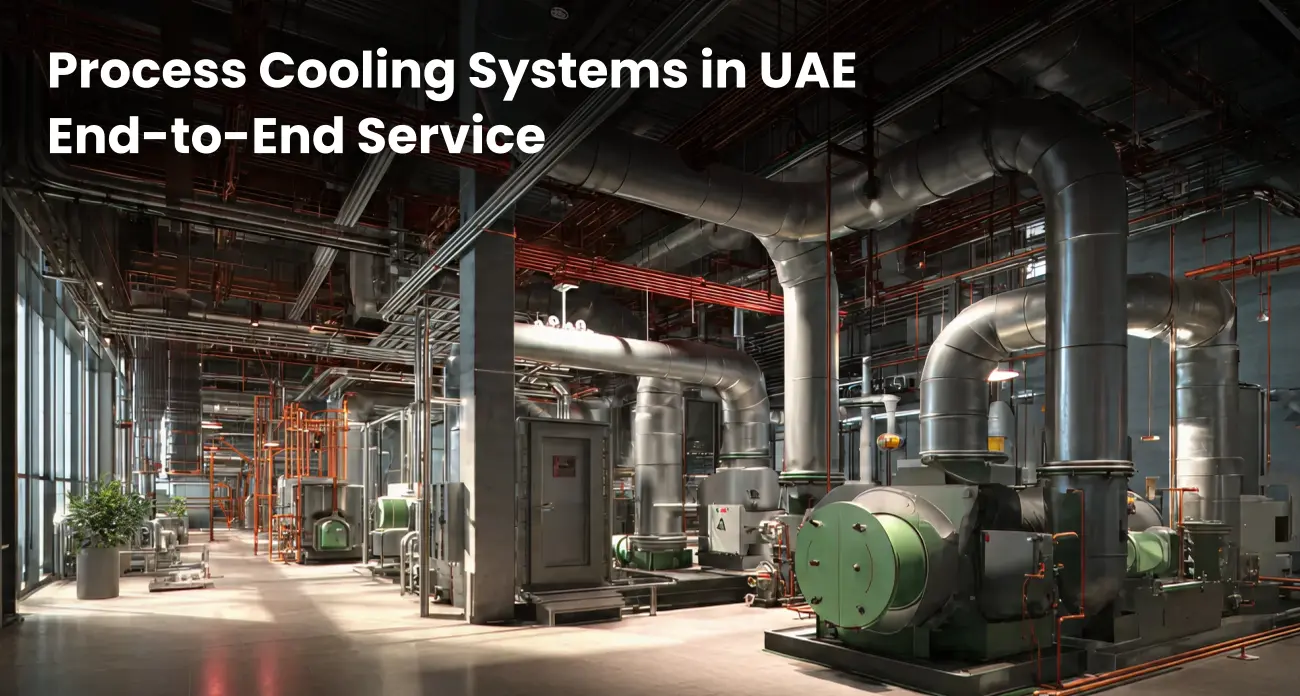
Chillers operate differently. Rather than circulating refrigerant directly to occupied spaces, they produce chilled water that is distributed throughout the building via air handling units and fan coil units.
Commercial chiller systems are commonly installed in large-scale developments where cooling loads are substantial and continuous.
Typical Applications
- Shopping malls
- Airports
- Industrial facilities
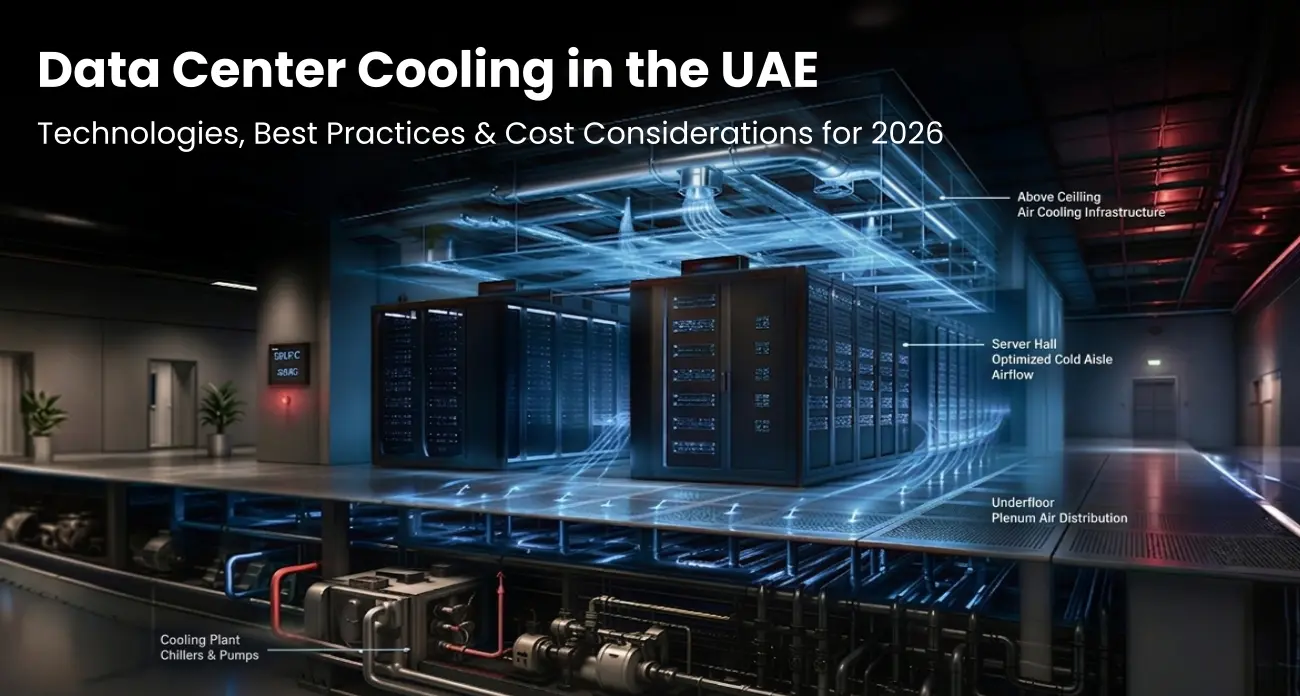
- Data centers
- Large mixed-use developments
- High-rise commercial towers
Because chilled-water networks can serve extensive floor areas efficiently, chillers remain a preferred solution for large infrastructure projects.
Key Differences Between VRF and Chiller Systems
When comparing these technologies, several factors should be evaluated.
| Feature | VRF Systems | Chiller Systems |
|---|---|---|
| Installation Scale | Medium-sized buildings | Large facilities |
| Zoning Capability | Excellent | Moderate |
| Initial Investment | Lower to moderate | Higher |
| Expansion Flexibility | High | Limited |
| Cooling Capacity | Medium to high | Very high |
| Maintenance Complexity | Lower | Higher |
| Space Requirement | Compact | Larger plant room required |
VRF vs Chiller Energy Efficiency
Energy consumption is often the most important consideration when selecting cooling infrastructure.
The discussion around VRF vs chiller energy efficiency frequently depends on operating conditions.
VRF Advantages
VRF technology adjusts cooling output according to actual demand.
Benefits include:
- Reduced energy consumption
- Better part-load performance
- Precise temperature control
- Lower operating expenses
Chiller Advantages
Modern chillers are highly efficient when operating under heavy and continuous cooling loads.
Benefits include:
- Excellent performance for large facilities
- High cooling capacity
- Long equipment lifespan
- Effective centralized management
For smaller and medium-sized buildings, VRF systems often deliver superior efficiency, while large developments with substantial operational demands frequently benefit from the enhanced overall performance offered by chiller systems.
VRF System vs Chiller Cost Comparison
Cost analysis should include both initial investment and lifecycle expenses.
Initial Installation Costs
VRF solutions generally require:
- Less plant space
- Simpler installation
- Lower infrastructure requirements
Chiller installations typically involve:
- Chilled water piping
- Cooling towers
- Pumping systems
- Mechanical plant rooms
As a result, chillers usually require higher upfront capital investment.
Long-Term Operating Costs
When evaluating a VRF system vs chiller cost comparison, operational efficiency becomes equally important. VRF systems can lower energy consumption in buildings with variable occupancy.
The most cost-effective option depends on building size and usage patterns rather than equipment price alone.
Which Cooling System Is Best for UAE Climate?
The answer depends on several factors:
Choose VRF When:
- The building has multiple occupancy zones.
- Independent temperature control is required.
- Space is limited.
- Energy optimization is a priority.
- The project involves offices, schools, or hotels.
Choose Chillers When:
- Operational demands are very high.
- The facility operates continuously.
- Centralized system management is preferred.
- Future scalability is important.
Both technologies can perform exceptionally well when properly designed and maintained.
The Role of Energy-Efficient HVAC Systems
Modern businesses are increasingly focused on sustainability and operational savings.
Today's energy efficient HVAC systems incorporate:
- Smart controls
- Variable-speed drives
- Building automation systems
- Occupancy-based cooling
- Real-time monitoring
These innovations improve performance regardless of whether a VRF or chiller solution is selected.
The emphasis should be on proper design, installation quality, and ongoing maintenance rather than technology alone.
Commercial Cooling Solutions for Modern Buildings
The demand for sophisticated commercial HVAC and environmental control systems across the UAE continues to expand as organizations place increasing emphasis on energy efficiency, operational excellence, and enhanced occupant well-being.
Modern projects require cooling systems that can:
- Adapt to changing occupancy
- Reduce operational expenses
- Support sustainability goals
- Maintain indoor comfort
- Deliver long-term reliability
Both VRF and chiller technologies have evolved significantly and now offer sophisticated performance capabilities suitable for modern commercial environments.
Final Thoughts
The debate surrounding VRF vs chiller systems does not have a universal answer. Each technology offers distinct advantages depending on the building's size, cooling requirements, operational profile, and long-term objectives.
Chiller systems are particularly well-suited to large-scale developments, offering superior capacity and dependable performance in environments with significant thermal management requirements. When properly selected and engineered, either solution can deliver reliable, efficient, and sustainable climate control for commercial buildings.
Frequently Asked Questions
What is the primary distinction between VRF and chiller systems?
VRF systems transfer refrigerant directly to individual indoor units, enabling precise zone-level control, whereas chiller systems generate chilled water that is circulated throughout the building to deliver conditioned air across multiple spaces.
Which system is more energy efficient?
Energy efficiency depends on building size and operating conditions. VRF systems often perform better in medium-sized buildings, while chillers can be highly efficient in large facilities.
Which system requires less installation space?
VRF systems generally require less mechanical space and infrastructure than centralized chiller plants.
What is the best HVAC system for commercial buildings?
The best solution depends on cooling demand, building size, operational requirements, and long-term energy objectives.